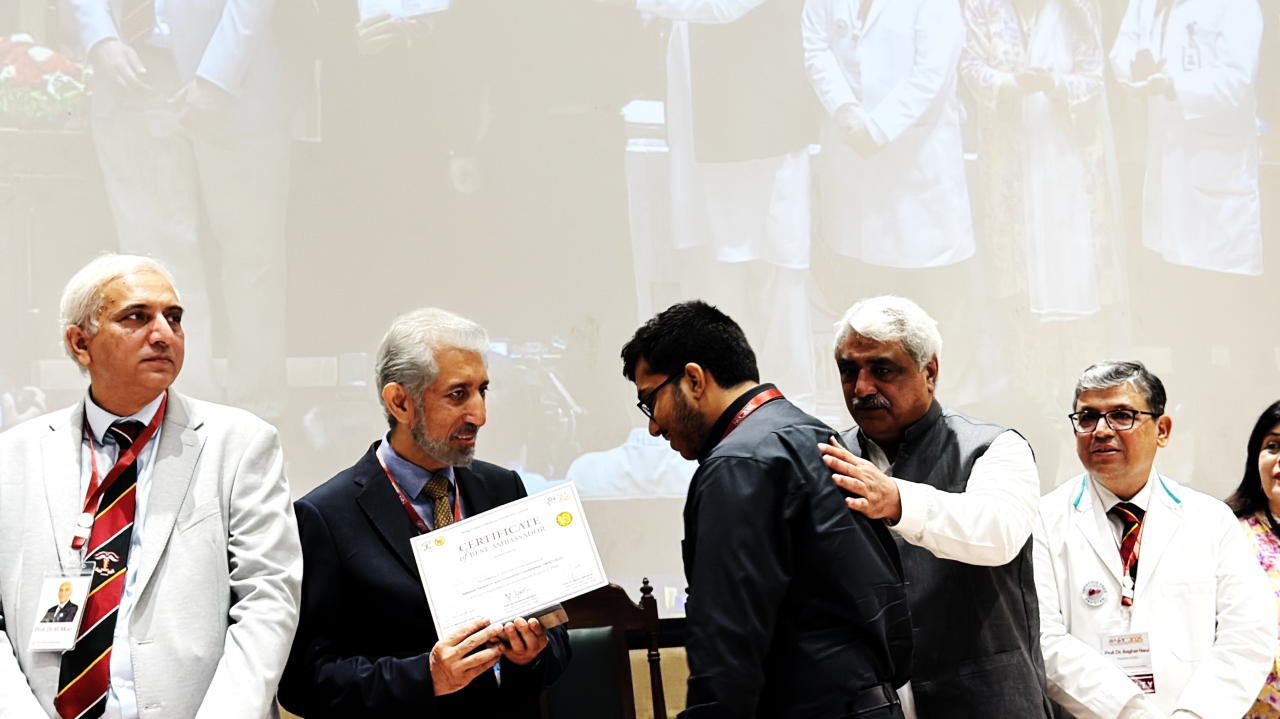
I Didn’t Volunteer. Let’s Get That Straight.
Summer break had just started — that tiny sliver of freedom every med student clings to like a promise. I had survived the last wave of exams by sheer stubbornness. I was exhausted, blurry, and honestly just a second-year kid nobody really knew outside his immediate circle... if a circle at all.
My plan for the summer was simple: Sleep. Study. Recover. That’s it.
And then came a message.
A request to build a landing page for a “conference” that barely existed. No design. No structure. No roadmap. Just a name floating in the void.
I refused. Instantly.
I wasn’t in the mood to posture as some helpful tech guy when I could barely remember what day it was. I told them no, that I had studies to focus on, that I didn’t want to pick up another “quick favour” project.
For a while, that was that.
But the thought kept circling back. Not because of the conference — at that point, there was no conference — but because I had this quiet, irritating feeling that maybe I could build something better than what anyone was imagining.
So, later that night, half-reluctant and half-curious, I said:
“Okay. Let’s do it.”
I didn’t know I was handing over my entire summer.
What I Thought I’d Be Doing
A simple landing page. A neat, clean, one-page website.
What I Actually Ended Up Doing
- Building a full-stack conference platform
- Designing NRIC’s entire identity, theme, and visual world
- Developing an internal Android app
- Leading registrations for 1300+ people
- Designing all merch, certificates, badges, banners
- Running operations, tech, vendor negotiations, and crisis control
- All while being… still a second-year med student
None of this was part of the deal. None of this was expected. But somehow it became mine.
Phase 1: Code Until the Edges Blur
I started building in early June. Three weeks in, I had already chained myself to a system bigger than anything I'd built before:
- A responsive, fast, Next.js website
- A full backend with APIs I wrote from scratch
- Registration systems, abstract submissions, profile dashboards
- Automated certificate workflows
- A verification system that actually worked under load
By July 1st, registrations went live.
I watched the dashboard spike — the numbers, the names, the real people using something I built — and for a moment everything went still.
I whispered to myself:
“It’s working.”
Nobody knows what that moment felt like. Nobody saw the all-nighters, the debugging marathons, the panic-testing at 3 a.m.
It was just me. And Warda Rasool (my extremely respectable senior from KEMU Batch '25) — testing flows, catching bugs, going line by line with me on WhatsApp when most of the city was asleep.
We didn’t have a QA team. We were the QA team.
And honestly? I wouldn’t have survived that phase without her.
Phase 2: When Ops Hit Like a Truck
Here’s the thing: I’m not a coder by profession. Tech is a side-hobby. Medicine is my real path.
But somewhere along the way, in the middle of all this building and fixing, I became Director of Operations & Technology.
It wasn’t a promotion. It was necessity. Someone had to take charge. Someone had to make sense of the chaos.
Suddenly, I was setting:
- check-in flows
- verification systems
- crisis protocols
- departmental coordination
- timelines and policies
- the structure of how this entire conference would run
And right beside me — steady, patient, unshakable — was Warda Api.
We created the backbone of NRIC together, piece by piece, policy by policy, decision by decision. She was the quiet constant in the middle of insanity — the only person who understood the scope of what needed to happen.
With her, and with a handful of people who truly carried the weight, everything slowly started to look possible.
Phase 3: Branding Like My Life Depended on It
I knew one thing: NRIC could not look like a typical student event. It needed identity. Weight. Legacy.
So I built a world around it — a visual language that felt like an institution, not a project thrown together.
I designed:
- The official theme (Innovamus Ergo Sumus)
- Branding for everything
- Banners, flags, IDs, shirts, lanyards
- Every certificate — even the ones that landed on the Health Minister’s desk
- Tote bags, notepads, pens
- Every PDF, document, policy, and mailer
And when a vendor tried to scam us with low-quality work? I shut it down.
Details matter. Vision matters. If I care, it has to show.
The Days Before the Conference
By July 20th, I was done. Fully done. Sleep-deprived, angry, burnt-out, carrying weight I shouldn’t have had to carry.
On July 29th, I almost deleted the entire website. Yes, actually deleted it. That’s how far gone I was.
But then I thought of the people who didn’t leave me alone in the fire — Warda Api, Ahmad Bhai, Ghadiya Api, Fahad Bhai, the handful who didn’t just show up when it looked glamorous.
I stayed because of them.
Conference Day — August 2nd
Everything worked.
- Check-ins smooth
- Systems stable
- Branding cohesive
- Flows intuitive
- Ops clean
We processed over 1400 attendees without a single digital crash.
Faculty praised us publicly. The Pro-VC’s words still sit somewhere in my chest. People saw the polish. People felt the difference.
And I didn’t need to explain anything. The work explained itself.
Aftermath
Now that it's over, the exhaustion has its own quietness. A strange peace.
Because I know — and I won’t sugarcoat this — NRIC 2025 would have been unrecognizable without what we built.
Not because of me alone, but because of the vision we carried when everyone else just wanted something “functional.”
KEMU deserved better. We made better.
What I Learned
- No one is coming to save you.
- You can be 20 and still run an entire system.
- Branding isn’t decoration — it’s identity.
- Trust is a currency.
- Leadership is not a title. It’s a decision.
And most importantly: You don’t have to be “senior enough” or “important enough” to build something that lasts.
Last Words
To anyone who thinks they’re too young or too unqualified:
You’re not. You just need to care more than the room expects you to.
And to Warda Api — thank you for trusting me, grounding me, and surviving my 4 a.m. rant sessions when I was one bug away from losing my mind. I couldn’t have built this without your steadiness beside me.
What you dream, what you design, what you code — it becomes real if you fight for it.
I did. And yes… I’d do it again.
— Fateh Alam Director of Operations & Technology, NRIC 2025